
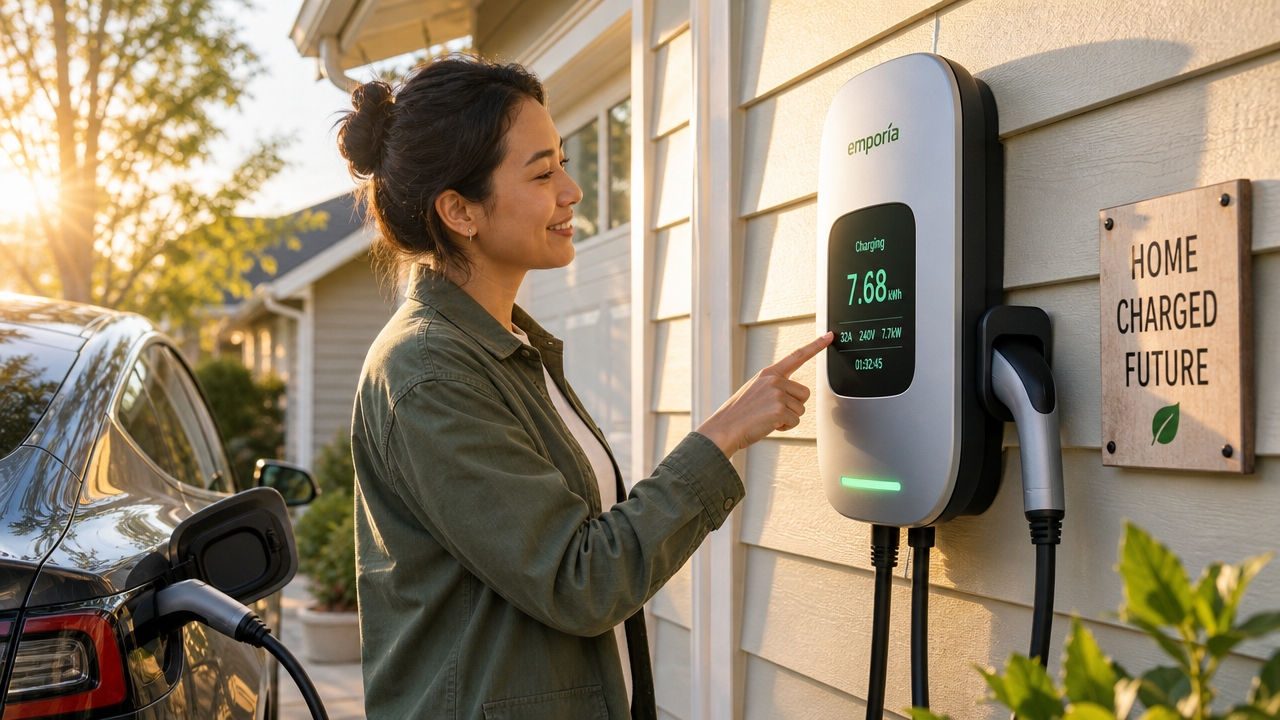
To calculate your charging costs, first find the per-kWh rate on your utility bill’s supply section. Multiply this rate by your car’s usable battery capacity to find the base cost. Don’t forget to add roughly 15% for efficiency losses during the AC-to-DC conversion. Check for off-peak time-of-use discounts and include fixed delivery fees for an accurate total. Master these variables to guarantee you’re capturing every penny spent on your vehicle’s energy.
Key Takeaways
- Identify your electricity rate per kWh under the “Supply” section of your utility bill, checking for tiered pricing or discounts.
- Multiply your EV’s usable battery capacity by the electricity rate to establish a baseline cost for a full charge.
- Account for 10% to 15% efficiency loss during the AC-to-DC conversion process when calculating the actual energy drawn from the grid.
- Schedule charging during “super off-peak” windows to take advantage of lower time-of-use rates offered by your utility provider.
- Incorporate fixed monthly service fees and delivery charges into your calculations to determine your true effective electricity rate.
Identify Your Electricity Price per Kilowatt-Hour
Pinpoint your exact electricity cost by examining the “Energy” or “Supply” section of your most recent utility statement. You’ll find a specific rate listed as dollars or cents per kilowatt-hour (kWh). Don’t just look at the total bill amount; focus on the variable usage rate. Check if your provider implements tiered pricing, where costs increase as you consume more power.
Many utility companies also offer time-of-use schedules. These plans markedly lower your expenses if you charge during off-peak overnight windows. You should also verify whether your local utility provides specialized EV rebates or discounted rates specifically for electric vehicle owners.
Remember to include any mandatory regulatory surcharges or delivery fees that scale with your usage. Once you’ve located this numeric value, you possess the critical baseline needed for all future calculations. Knowing this figure guarantees you understand exactly what you’re paying for every unit of fuel.
Multiply Battery Capacity for Base EV Charging Cost
Calculate your base charging cost by multiplying your car’s total battery capacity by the electricity rate you found on your bill. For instance, if you drive a vehicle with a 75 kWh battery pack and your utility provider charges $0.15 per kilowatt-hour, you’ll multiply 75 by 0.15. This simple equation reveals that a full charge from zero to one hundred percent costs you $11.25. You’re effectively treating your battery like a fuel tank; instead of gallons, you’re counting kilowatts.
Don’t guess your battery’s size. Check your owner’s manual or the manufacturer’s digital dashboard to find the exact usable capacity. Once you’ve mastered this basic math, you can easily project your monthly fuel savings compared to a traditional gas vehicle. It’s the most direct way to understand your primary energy expenses. Keep this baseline figure handy as you track your driving habits and manage your overall household energy budget effectively.
Factor in Home Charger Efficiency Losses
While multiplying battery capacity by your utility rate provides a helpful baseline, you won’t actually see that exact number on your electric bill due to energy lost during the charging process.
When you pull electricity from your wall outlet, the onboard charger must convert alternating current (AC) into the direct current (DC) your battery requires. This conversion generates heat, wasting roughly 10% to 15% of the total energy. You’re paying for every kilowatt-hour that leaves the grid, not just what ends up in the car.
To calculate a realistic cost, don’t just look at the battery’s size. Instead, divide your battery capacity by an efficiency factor of 0.85.
If you’re using a standard Level 1 charger, expect even higher losses because the vehicle’s cooling systems run longer during the slow trickle. Always account for this overhead so you aren’t surprised when your monthly statement arrives higher than expected.
Compare Time-of-Use Rates for Cheaper Charging
Many utility providers offer time-of-use (TOU) plans that markedly slash your costs if you plug in during off-peak hours. Instead of paying a flat rate, you’ll navigate price tiers that fluctuate based on grid demand. When you shift your heavy charging sessions to late nights or early mornings, you leverage the surplus energy available at bargain prices. You’ll quickly notice that timing isn’t just about convenience; it’s the primary driver of your monthly savings.
To optimize your budget, you should:
- Download your provider’s hourly rate schedule immediately.
- Identify the specific “super off-peak” windows for maximum discounts.
- Program your EV’s onboard software to start charging automatically.
- Avoid peak evening hours when electricity prices skyrocket.
- Compare various TOU tiers to match your driving habits.
Include Monthly Fixed Utility Delivery Charges
Even though you’ve pinpointed the lowest rates per kilowatt-hour, don’t ignore the fixed delivery charges that appear on every monthly statement. These line items aren’t tied to your consumption; instead, they cover grid maintenance, infrastructure upgrades, and administrative costs.
If you’re calculating the true cost of powering your EV, you can’t just look at the variable rate. You must factor in these recurring service fees because they impact your total expenditure.
To find your effective rate, add the monthly service charge to your total energy usage cost, then divide by the number of kilowatt-hours consumed. If you don’t account for these stationary costs, you’re underestimating your refueling budget.
Many utilities hide these fees behind labels like “Customer Charge” or “System Access Fee.” Always check your bill’s fine print. By incorporating these fixed expenses, you’ll gain a precise understanding of your EV’s operating costs and avoid unexpected financial surprises.
Frequently Asked Questions
Does Using Public Fast Chargers Cost More Than Charging at Home?
You’ll pay substantially more at public fast chargers than you do at home. These stations charge premium rates for speed and convenience. You’ll save money by plugging in overnight using your own residential utility plan.
How Does Extreme Cold Weather Affect the Cost of a Full Charge?
Cold air drains your battery like a leaky bucket, forcing you to pay for extra kilowatt-hours. You’ll spend more because freezing temperatures reduce chemical efficiency, meaning you’re buying extra energy just to stay warm.
Will Installing a Level 2 Charger Increase My Property Taxes?
You won’t typically see higher property taxes after installing a Level 2 charger. Most local assessors view these units as personal property rather than permanent fixtures that hike your home’s assessed value or tax bill.
Do Electric Vehicle Tires Wear Out Faster Than Internal Combustion Tires?
You’ll replace tires more often because an electric car’s heavy battery and instant torque increase friction. Since you’re driving a heavier vehicle that accelerates quickly, you’ll notice tread disappearing faster than on traditional gas models.
Are There Federal Tax Credits Available for Installing Home Charging Stations?
You’ll claim a federal tax credit for your home charger installation. The Alternative Fuel Vehicle Refueling Property Credit lets you deduct thirty percent of costs. It’s capped at one thousand dollars, so keep your receipts.
Conclusion
You’ll save a fortune by mastering these calculations, especially since driving electric costs about 60% less than using gas annually. Once you’ve factored in efficiency losses and peak utility rates, you’ll see how affordable home charging really is. Don’t let hidden fees surprise you; keep track of your kilowatt-hours to maximize your savings. Now that you’ve got the tools, you can confidently power your journey without breaking the bank. Happy driving!